Questions to ask about answering-service limits and extra charges
Useful answering service overage fees questions establish what counts toward the allowance, what happens when it runs out, and who must approve a paid change. Ask for those answers in writing before activation. A monthly price does not tell you whether calls continue, an upgrade is required, or an additional charge applies. Use the worksheet below to turn those unknowns into decisions for your specific setup.
Updated
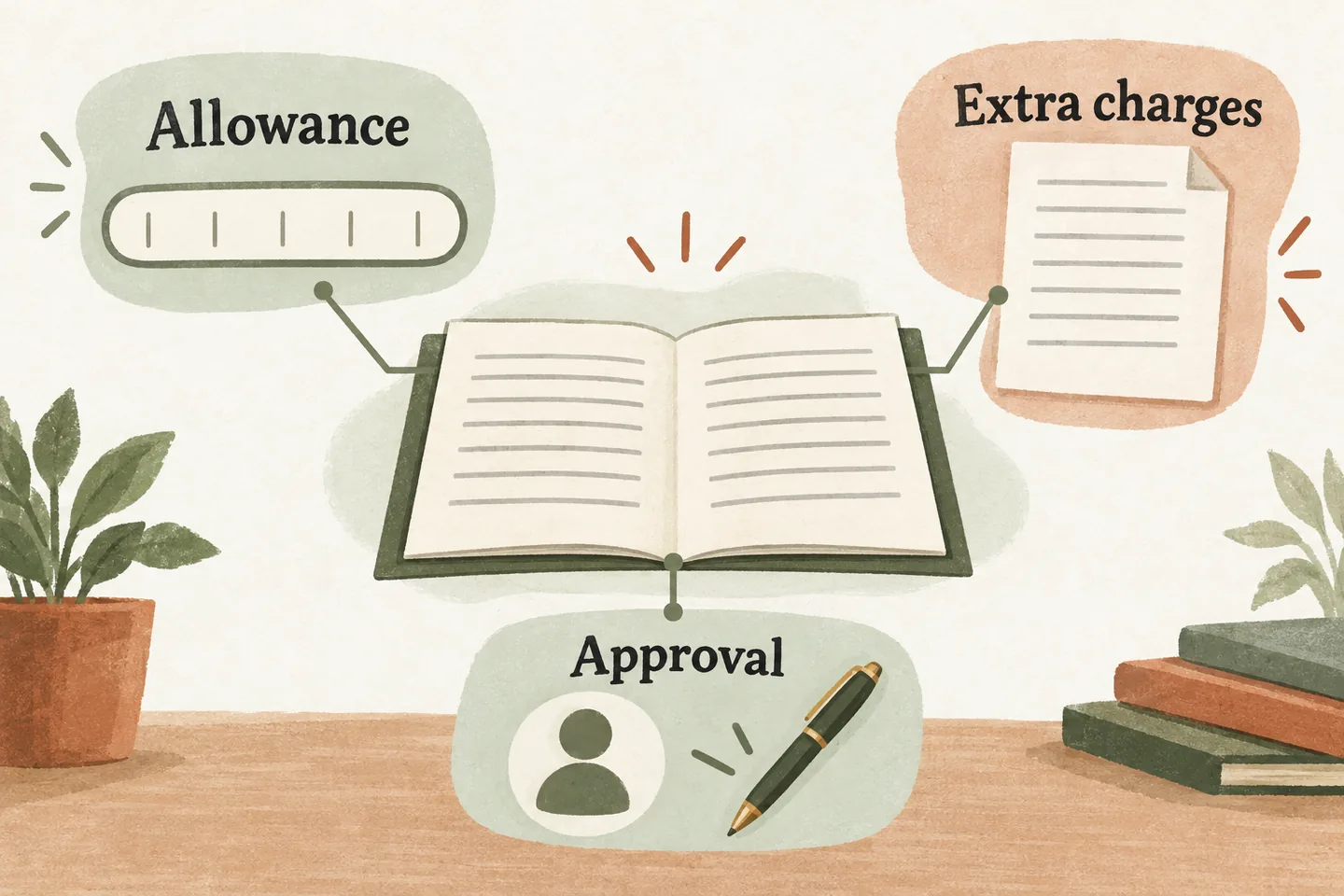
Start with the unit that appears on the bill
Ask the provider to define its billable unit and show how a single call becomes a usage entry. If the quote uses minutes, clarify when counting starts and stops, whether rounding occurs per call, and how transfers or unsuccessful connections are treated. These are questions to resolve; they do not describe every provider’s billing method.
Confirm the allowance period and reset date. Ask how you can review usage, who receives any warning, and whether a warning gives staff enough time to act. Keep the answer specific: “we monitor usage” does not identify the person responsible for checking the approaching limit.
For an AI receptionist for small business, define the route being priced: your main line, overflow or a limited coverage period. A quote for one route cannot explain the bill for an unspecified expansion.
Copy this charge-and-approval worksheet
Start a separate copy for each proposed package. Put the provider, quote date, billing currency and business approver at the top. Replace each bracket with a written answer or mark it unresolved. A blank amount is unknown, not zero.
| Item to clarify | Written answer to collect | Decision or owner |
|---|---|---|
| Billable unit | [Counting start/stop and rounding rule] | [Person checking usage] |
| Allowance | [Included quantity and reset date] | [Person reviewing the fit] |
| At the limit | [Continue, change, pause or other agreed action] | [Who authorizes the next step?] |
| Extra usage | [Whether offered, price basis and conditions] | [Prior approval required?] |
| Initial setup | [Included work and preview revisions] | [Who approves completion?] |
| Optional work | [Separate scope, amount and billing frequency] | [Named business approver] |
| Change date | [Effective date and any partial-period treatment] | [Who confirms the revised total?] |
| Evidence | [Quote or dated reply answering each item] | [Open question and follow-up date] |
Keep recurring and one-time amounts separate. Ask whether a price includes applicable tax and whether another supplier bills any part directly. Record an exclusion even if your team can work around it; the workaround may require staff time or a different service.
Use the broader answering-service evaluation checklist for capability and support questions. This sheet isolates the charging decisions that need a specific answer.
Get an operational answer for the allowance limit
Ask: “If our allowance is reached while this route is active, what happens to the next caller?” Then ask who is contacted, how a change is approved, and what applies while a decision is outstanding. Do not assume that an allowance implies either unlimited continuation or an immediate shutdown.
If a provider offers paid extra usage, request the rate, unit and applicable conditions in writing. If it proposes a plan change instead, request the effective date and revised scope. A rate calculated by dividing the subscription price by included minutes is not evidence of an excess-use price.
For our service, the current homepage says the handling of usage limits is agreed before activation. Plan upgrades are arranged with the team; extra minutes and automatic overage charges are not enabled by default. Confirm the arrangement for your business before routing calls.
Separate standard setup from optional work
As checked October 28, 2026, our current USD plans list US$99 for 100 call minutes, US$249 for 450, and US$497 for 1,000 per month, before applicable tax. Standard scope covers one business, location, receptionist and supported calendar, with standard setup and one assisted preview revision. Messaging is not included and is agreed separately.
Use those boundaries as the starting scope, not a promise about every requested change. For a new destination, another location or a more complex connection, ask whether the work is supported and request its written scope before agreeing to a price. An optional feature discussed in a sales conversation is not automatically part of the selected package.
If language assistance is proposed, define a business phone interpreter request policy before approving its scope or cost. Identify tested support, the human contact and what happens when no approved help is available.
For telephone-provider charges and exit responsibilities, compare call forwarding vs number porting for your business before authorizing changes to the line or its account.
Ask for an example using your call pattern
Bring a measured workload range from your call records, using the AI receptionist minutes estimate if useful. State which durations are measured and which are estimates. Request one written example inside the proposed allowance and another above it, using the provider’s confirmed counting rules.
Ask the provider to show how it reached the example total. If a price or counting rule is still unknown, leave that part unresolved rather than inventing a surcharge. Retain the example with the quote so the assumptions can be checked later.
Name the approver before activation
Close the worksheet with three entries: the agreed scope, the person allowed to approve paid changes, and the route for reporting a mismatch. Keep the approved version alongside later revisions. When reviewing the first billing period, compare the charge and usage records with that version and ask about differences.
Before widening the route covered by that agreement, use the AI receptionist rollout plan to define the next coverage stage, its acceptance evidence and who can restore the previous call arrangement.
You can try the live AI receptionist demo with a fictional, nonsensitive call. The configuration opens first; press Start when ready. The sample does not establish billing terms. Request a personal demo to discuss your worksheet and resolve the proposed scope before activation.
Sources and further reading
YOUR CALLS, YOUR NEXT STEP
Bring your charge-and-approval sheet to a personal demo

Try the live demo with fictional details, then request a personal demonstration to clarify scope, usage limits and any separately agreed charges.