Landscaping answering service: qualify estimate requests while crews work
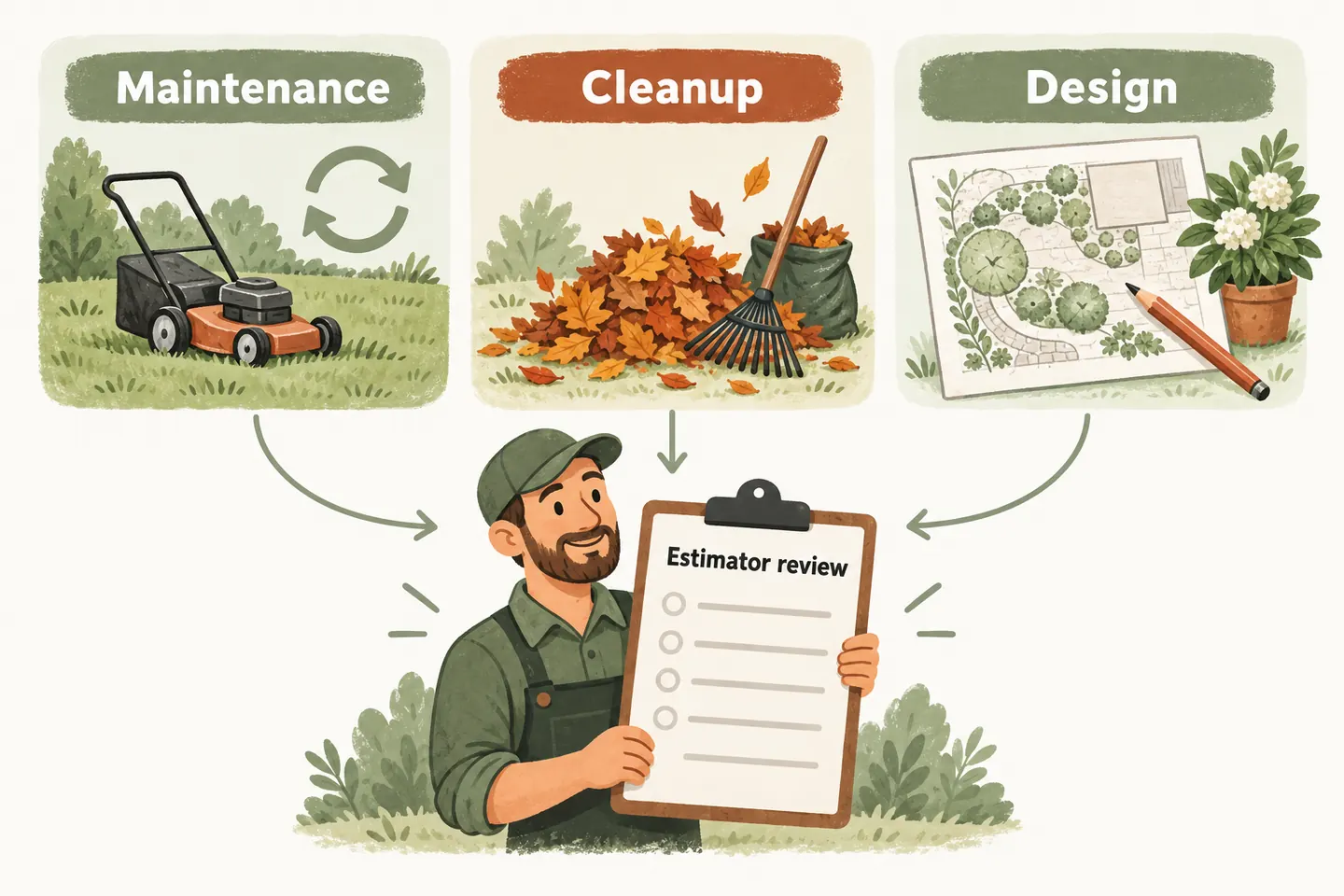
A landscaping answering service should turn an enquiry into a usable request while the crew is working. Start by separating recurring maintenance, one-time cleanup and a new design project. Check the business’s accepted work and service area, collect relevant property details, and identify who reviews the request. Capturing a preferred date is not a quote, a booked crew or a promise that work can begin.
Define which landscaping enquiries you accept
Give the receptionist an owner-approved list of services, exclusions and coverage rules. Do not use “all landscaping” if the business only maintains lawns and garden beds. A caller asking about design, tree work or another specialty needs an accurate answer about whether that work is accepted.
Use the service-area eligibility worksheet for uncertain locations. A nearby property is not automatically on an approved route. If the request falls outside the published scope, explain the limit politely. Ask for staff review only where the owner permits exceptions; do not invent a referral, surcharge or special arrangement.
Use different questions for three request types
This original worksheet is an editable planning aid. Replace each prompt with your own accepted work and intake requirements. The questions help prepare a review; they do not measure the site, calculate a price or establish that a crew is available.
| Request type | Opening question | Useful details | What stays unconfirmed |
|---|---|---|---|
| Recurring maintenance | “Are you looking for ongoing care, or calling about an existing service?” | Requested tasks, preferred frequency, property location and areas to maintain. | Route fit, start date, visit frequency and recurring price. |
| One-time cleanup | “What would you like cleared or tidied, and in which part of the property?” | Caller-described work, affected areas, access constraints and preferred timing. | Workload, removal arrangements, equipment, price and completion date. |
| New design estimate | “What change would you like to make, and are you seeking design, installation or both?” | Project goals, affected area, existing plans if any and desired timeframe. | Feasibility, design scope, installation commitment and project cost. |
When a caller wants several things, preserve each request instead of forcing it into one category. Weekly care plus a new planting area may need separate reviews. If the caller does not know which service fits, record the goal in their own words and leave the category open.
Collect property context without turning it into a quote
- Caller: name and agreed callback details, read back for accuracy.
- Location: service address and the areas being discussed, rather than a billing address.
- Work: requested tasks and whether the enquiry is recurring care, a one-time job or a new project.
- Property context: relevant access restrictions or caller-supplied size, clearly marked as unverified.
- Timing: preferred date or frequency, labeled as a preference rather than a commitment.
- Handoff: assigned reviewer, unresolved questions and the next step explained to the caller.
Do not require callers to guess measurements they do not know. “Small front lawn” is their description, not a measured area or pricing input. Avoid collecting gate codes, payment details or unnecessary personal information during initial intake. If photos would help, staff should provide an approved process; do not assume the voice service includes photo collection or messaging.
The National Association of Landscape Professionals’ hiring guidance recommends putting project details, costs and timing in writing before an agreement. A receptionist’s request summary supports that later conversation; it does not replace the business’s proposal or approval process.
Compare three hypothetical enquiries
- Maintenance: a new caller wants lawn and bed care every other week. Record the desired tasks and frequency, then send the request to the maintenance reviewer. Do not say that a fortnightly route or recurring price has been approved.
- Cleanup: a caller describes leaves and garden debris before a family event. Preserve the requested deadline and property details for the estimator. The event date does not establish availability, workload or a guarantee of completion.
- Design: a caller wants to replace part of a garden with a seating area. Record the goal and whether they want design advice, installation or both. Let the appropriate person assess feasibility and scope; do not suggest materials or a project price.
These are fictional examples, not customer results. An existing customer asking about a missed visit needs the existing-service route, not another sales estimate. Preserve the issue for staff without claiming access to crew location, route progress or a changed work order.
Give the estimator a clear next action
When you design an AI receptionist call flow, assign a reviewer to each accepted request type. Identify what happens if that person cannot answer, and use only callback expectations the business has approved. The request should make clear what remains for a human to decide.
As checked October 21, 2026, our offer uses approved business information and request capture. Booking requires an enabled workflow and connected Google Calendar, with confirmation only after a successful save. A saved estimate appointment is not a landscaping job booking, crew dispatch or permission to start work.
Review how the AI voice agent handles calls before assuming an integration. The public offer does not establish landscaping-software sync, multi-crew scheduling, automatic site estimates or weather-based rescheduling. Plant diagnosis, pesticide advice and technical design recommendations belong outside this intake script.
Test unsuitable work and an unavailable date
Use fictional details to test each worksheet row, one excluded service and an unavailable preferred date. For the excluded service, check that the response follows the actual policy without inventing an exception. For the unavailable date, verify that the record preserves a preference or review request rather than claiming a booking.
Also change the property address during a call and check that coverage is reconsidered. Review the final record against what the caller heard: category, relevant details, uncertainty, assigned owner and honest next step. AI can misunderstand; fix unclear instructions and retest before relying on them.
You can try the live AI receptionist demo with a fictional landscaping enquiry, then request a personal demo for your actual intake rules. The website sample creates no real appointments. Production service requires approved configuration, setup checks and paid activation.
Sources and further reading
YOUR CALLS, YOUR NEXT STEP
Try a landscaping estimate enquiry

Use fictional property details in the live demo. Request a personal demonstration to review your maintenance, cleanup and design-intake rules before production activation.